Pin Point, Periodic Times Table, and Mahjong Tide are in the DLE Directory now. I opened all three today and left the first move blank. I wanted to know which one I would start tomorrow, not which one I could finish in a review tab.
Pin Point tells you the counts, not the squares
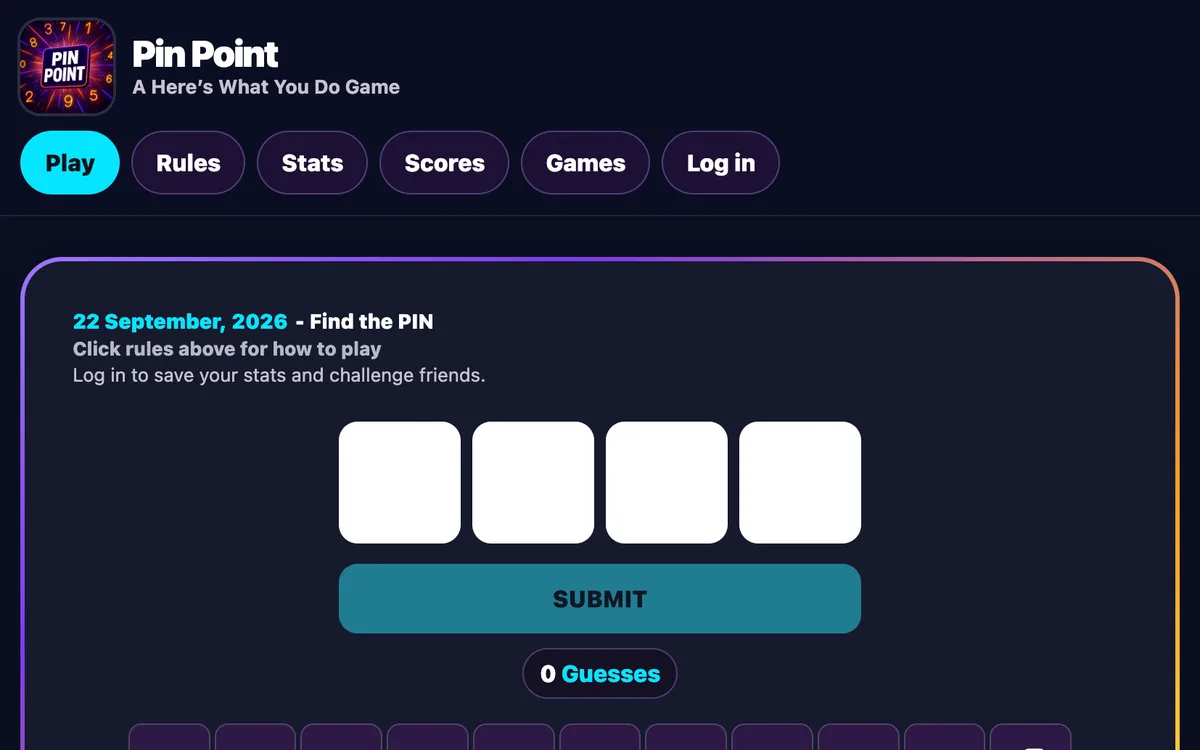
I opened Pin Point on four white squares. Zero guesses. Today’s job is a shared four-digit PIN, and after you send a try you only get totals: how many digits are right, how many are too high, and how many are too low. It will not point at the squares. That is the whole squeeze. You can recolor a digit if you want a note to yourself, which I like, because the feedback is honest and incomplete at the same time.
I did not type a PIN. The first squares stayed white. What I like, and this is taste, is that it is not Wordle paint and it is not LinkedIn’s Pinpoint either. This one is a number lock with a fogged keypad. I would open it when I want a short sit that still makes me hold three counts in my head.
Periodic Times Table makes the distance wear a lab coat
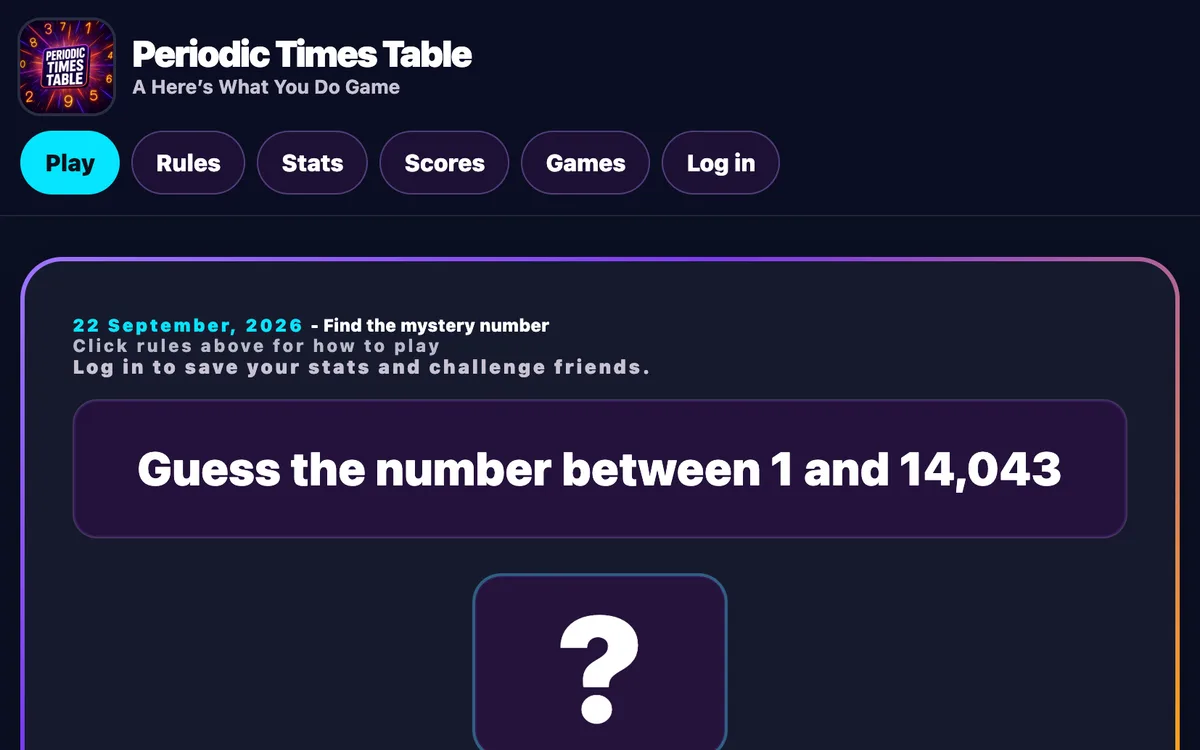
Periodic Times Table asks for a mystery number between 1 and 14,043. Everybody gets the same one that day. I left the guess box empty, because a first throw here is not cheap: the reply is your distance, written as periodic-table elements, each standing for its atomic number. If you are within 118, that distance can be a single element. Farther out, it can be two atomic numbers multiplied, and sometimes a third element added or subtracted, with the multiplication first. Three elements does not mean you are farther away than a two-element guess. I sat with that for a minute. It is the kind of clue that looks like showing off until you realize it is just a coded number line.
I would come back for this when I want a hunt that is slower than a PIN and meaner than a plain higher-or-lower. I would not come back if I wanted to mash digits until something greened. The chemistry is the language, not the subject.
Mahjong Tide’s daily is the board that unlocks the art
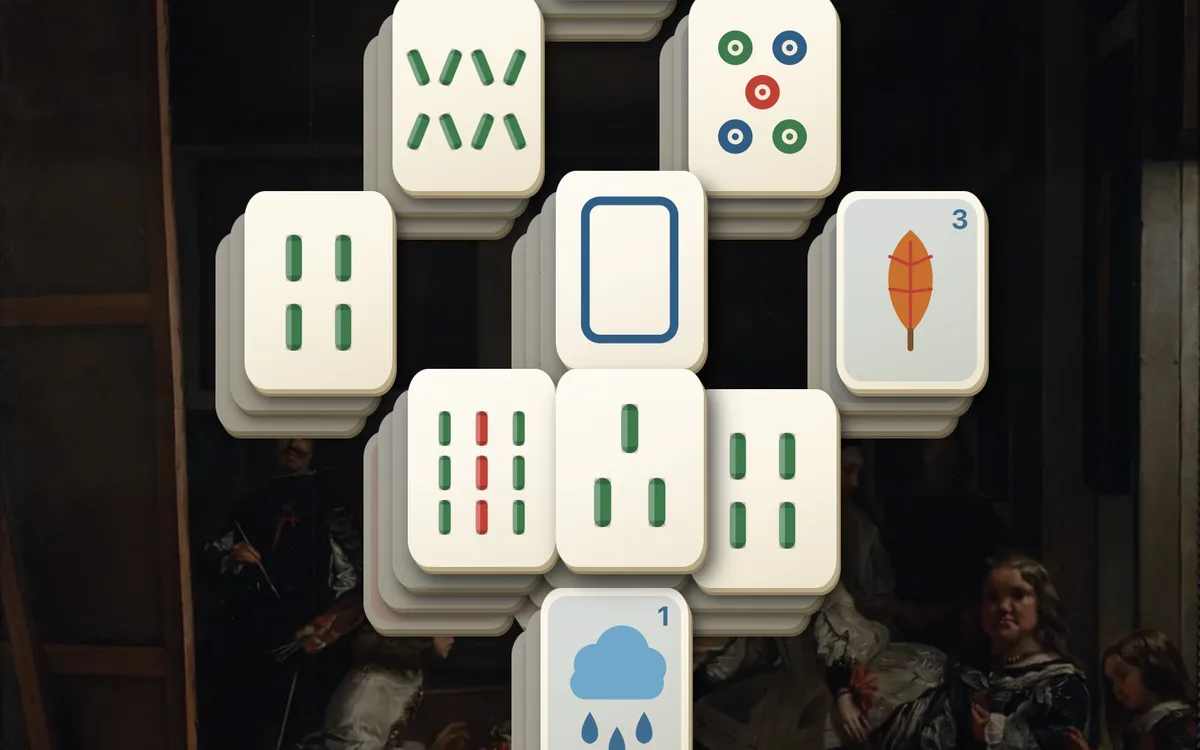
Mahjong Tide is the one I would not describe by today’s painting. Daily Art is the shared loop: four sizes of one day’s solitaire, and clearing any of them unlocks the artwork behind the tiles. I opened Mini Tide Flower and left the tiles where they were. Undo and a hint sit in the chrome if you want them. Flow, The Journey, and Free Play are still there if you want more boards, but those are not the daily. The daily is the one picture everyone is digging toward.
The friction I sat with is pace. Pin Point and Periodic want a number in your head. This one wants your eyes on free edges. I would take Mini when I want tiles instead of digits, and I would leave Full for a longer night.
Which of these should you try first?
If I only had one sit tonight, I would take Pin Point, because four digits and three counts is a day I can finish. I would take Periodic Times Table when I want to decode a distance instead of a lock, and Mahjong Tide when I want matching instead of arithmetic. All three play in a browser without an account.
FAQ
Are all three games updated daily?
Yes. Pin Point and Periodic Times Table label today’s date on the play page. Mahjong Tide’s shared daily is Daily Art, with Mini, Small, Medium, and Full sizes of the same day.
Do these games require an account?
No. I opened all three without a sign-in. Here’s What You Do lets you log in later if you want stats saved. Mahjong Tide can save local progress on the device.
Is Pin Point the same as LinkedIn Pinpoint?
No. This Pin Point is a four-digit PIN from Here’s What You Do. LinkedIn Pinpoint is a separate game about guessing a category from clues.
Does a longer element expression mean I am farther from the number?
No. In Periodic Times Table, three elements in the expression does not mean you are farther away than a guess shown with two.
Is Flow the daily in Mahjong Tide?
No. Flow is an unlimited wave mode. The shared daily is Daily Art. The Journey and Free Play are also separate unlimited modes.
Conclusion
I left Pin Point with four white squares, Periodic Times Table at zero guesses, and Mahjong Tide’s Mini board untouched. That is enough. I would come back for the PIN when I want a short fogged lock, the mystery number when I want distance written in elements, and the daily tiles when I want to match instead of count.